Brexit means…?

Mrs May’s axiomatic definition reassured many after the referendum. For some it was a clear statement of a withdrawal from Europe and all its works, for some it was a democrat’s recognition of the will of the people, and for some there was room for hope about how terms would be agreed. There were doubtless some who thought Mrs May was bound to say something of the sort in the heat of the result but that perhaps over time cooler heads would prevail and a route to remaining in would be sought.

What was a stroke of genius in the immediate aftermath of the referendum is looking increasingly threadbare. In the intervening period the Tory party has managed to rub along without undue stress. There have been the occasional spats but a statement that can comprehend such a wide range of policy options from hard to soft Brexit does not provide enough of a target for anyone to secure purchase on for an argument.

At the moment the Conservatives are like a pack of hungry wolves looking for a carcass to fight over, growling at each other but unable to give vent to their growing frustration because no body of policy has emerged. No wonder Mrs May does not want to reveal her hand, it would likely be bitten off. It will be a feat of legerdemain worthy of Dynamo if she can carry out the negotiations without having to reveal what the deal is until it is done. Sadly, or perhaps fortunately, no one is that good.

Over the weeks and months to come, as statements crafted by the finest minds in the university of the bleedin’ obvious start to give way to substantive proposals these will be seized upon by hungry wolves on all sides of the debate. Depending on the level of compromise attempted the policy for Brexit will either enthuse some and outrage others or, more likely outrage all.

Worse for Mrs May, as all this is going on, the settled view of the majority of the electorate may start to change. If inflation and wage restraint take hold at the same time next year, those that voted for Brexit may have second thoughts. (Warning – votes for Brexit can go down as well as up). Given this an early election might be a good call, but then, who knows.

Mrs May seems to have a good way with words. Her promise to focus on those just about managing, her firm line on executive pay and footloose executives treating tax as optional were all launched with rhetorical flourish. The difficulty is when these things have to be delivered. Her political skills do not seem to match her verbal ones.

I cannot however feel much sympathy for the leader of a party whose leadership are able to transubstantiate infantile ambition into gravitas and lift party interest and power above the interests of the nation. A leadership which has almost destroyed the Union of the United Kingdom, indeed may still yet, and has put at risk the European project which, for all its faults, represents a way to unite in opposition to global forces which threaten the livelihood, and indeed the lives, of its citizens.

There is some way to go in the process of Brexit and better counsel may yet prevail. With all the challenges that exist in the world at the moment having the whole of the British political elite and public administration focused on taking the UK out of Europe is an error of political leadership of the highest order. Tony Blair’s premiership will rightly be forever blighted by the decision to take us into Iraq, David Cameron’s will surely be the same over taking us out of Europe.

The decision on Iraq casts a long shadow, down to the fate of the people of Aleppo and beyond. Brexit does not mean Brexit, it means a whole lot more. If the vote for Brexit was a protest vote against the incompetence of the political elite it cannot be dismissed as completely irrational.
Brexit – What a Mess!

Political elites around the world have been infected by an inability to provide genuine and convincing leadership. This partly because of examples of personal ambition or plain greed getting in the way of rational governance but it is much more to do with a far more insidious and profound undermining of concern for the big issues of politics.

It is thirty years since the “big bang” in the City of London, this, emblematic of a global process of financialisation and deregulation. Everything, being given a monetary value, traded and then gambled through more and more “sophisticated” derivatives.

The idea that there is something called society or that the economy is anything other than a series of rational, utility maximisers with perfect knowledge seek personal advantage has been undermined if not destroyed.

Politicans when they looked to set up the European Community had a rather greater vision. They had just come through two “Great” wars which had devastated a continent and killed millions of men, women and children. They knew that there were things that were more important than the price of bonds and derivatives. No one worries about the LIBOR rate in the cemetery.

I am not suggesting the past was a land where politicians were noble, selfless guardians of the greater good of humanity. Men’s motives have roots deep and complex. Neither am I suggesting that a well functioning economy is not vital for a good society. However I am arguing that there are some profound political issues which have been increasingly marginalised. Issues about who gets what and why have been parked on the basis that all boats rise as the productivity tide come in and what is there to worry about if living standards are increasing.

This model probably always had a limited life but when the tide is no longer rising, all the little boats in the harbour are stuck in the mud and the only ones gaining are those in the ocean going yachts the prospects for the future are grim.

We now have a set of politicians on the remain side of the argument who are reaping the discontent they have sown over the past thirty years. The everyday disparagement of the European Union, the failure to challenge a world-view which sees all current evils through the prism of immigration, an unwillingness to accept that being filthy rich is not a sign of being one of the elect and that inequality is eroding national solidarity.

Worst of all a failure to make a case for the European Union that is more than, it is the least worse future. Europe clearly has its problems, the democratic deficit being a key one. But the same politicians who rail on and on about faceless unelected bureaucrats would go apoplectic if you said ok we want to elect them. Europe needs radical reform, Britain should be at the heart of that process holding up a vision of a better future which is more than simply a more efficient economy. For many people “the economy” is a mythical beast. Which, bites them when there is a recession and does very little for them when there is a boom.

Whilst the remain side are reaping the seeds of discontent, the out campaign are busy sowing a more virulent strain of the crop. If they win I fear we are all in for a bad harvest.

Up Europe!

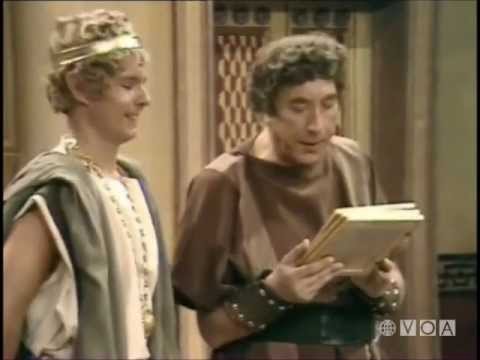
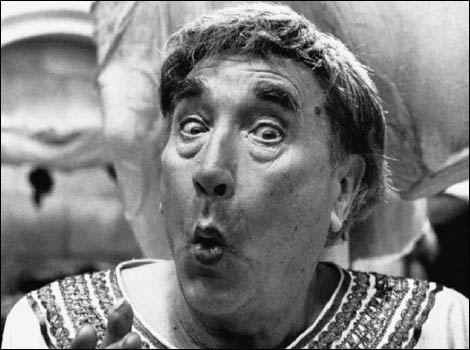
“Woe, woe and thrice woe!” says “Senna the Soothsayer” Cameron. The economy will collapse, world war three will start and we will be cast into the outer wilderness on the fringe of Europe. On the other side of the debate Senator “Ludicrus Sextus” Johnson has a profound but unaccountable fixation with bananas and seems to feel they are proof positive that we should leave Europe.


Nauseus“Nausius” Osborne on the other hand has written an ode on the perils of  leaving Europe clarifying that it will cost every household four thousand three hundred sesterces in lost GDP. Of course this is the Nausius who found twenty-eight billion sesterces on the way home from the Forum but had lost it again before he got home!

Lots of very clever people have been supporting Nausius and Senna in the Treasury, the World Bank, the IMF, and the Bank of England. Sadly their track record on prediction does not inspire confidence. Not one of them spotted lending money to individuals with no incomes, jobs or assets, by banks that were ludicrously in debt might end in tears.

Just as the cry goes up “we need a vision”  who should step forward but “Preator” Gove setting out how sovereignty could be recovered and trade with the rest of the world established. Unfortunately it seemed to be set within a vision of a return to Imperial Preference and ultimately the Gold Standard. You could almost hear the strains of Land of Hope and Glory as he spoke.

“Lurcio” Corbyn has sensibly been keeping his head down. Whether it’s about not intruding on private grief or not wanting to stir up his own portion of that grief he seems to be avoiding the bofrankie-howerd-07ut of rhetoric inflation that has taken over the Tory Party.

If this is a decision which will shape the future of our country for the foreseeable future the quality of the debate about it has been derisory. It is of course a difficult issue. The leave campaign have the problem of trying to conjure up what a different world might look like when many of the actors that will have a role in that different world flatly contradict what they say. On the remain side the case is difficult because it starts from the premise that Europe is in principle a bad thing but then goes on to insist we would be insane to leave it in practice!

One worries that when it comes to the vote the “don’t give a damn’s” will have it.

There is a radical case for the UK remaining within Europe. It is a case which also requires a commitment to reform both of the UK’s semi-detached position and the accountability of the existing Community structures. It has been made interestingly by Yanis Varoufakis, the sometime Finance Minister for Greece, and by Martin Sandbu of the Financial Times. Whatever you may think of their politics, and I have no idea what Mr Sandbu’s are, at least they raise fundamental economic, social and political questions about the future of Europe and the UK’s role in it. These are the questions the electorate should be considering, not spurious predictions about the future that are impossible to verify ex ante. More of this anon.