With the death of George Floyd “Black Lives Matter” became a global rallying cry for all those against racism. It was a simple statement encapsulating opposition to racism’s historical roots and its contemporary practice both individual and institutional.
Inevitably it would not be long before an attack on its credentials was forthcoming. Leading the charge, just as inevitably, was President Trump who in a tweet denigrating the painting of the logo on 5th Avenue which he claimed would “further antagonise New Yorks Finest” called Black Lives Matter a “symbol of hate”.
Kayleight McEnany, the Presidents Press Secretary, attempted to redefine the racist attack against a phrase with overwhelming national and international support by suggesting the President had “only” meant to refer to the “Greater New York BLM” whose president Kayleigh claimed had said “if this country does not give us what we want that we will burn down the system”, Her response “I call that a pretty hateful statement”.
One cannot envy the job of defending the indefensible. However, the steely Ms McEnany whose resting state is passive aggressive, with emphasis on the aggressive, does it without blinking. I have no idea whether she believes what she says but you have to admire her ability to project absolute certainty and confidence defending the incoherent ramblings of a rather dim man loaded with every prejudicial “ism” one can think of.
However, whatever her personal views, her attempt to paint the BLM movement as a hate filled threat to democracy, and that therefore the BLM moto should be rejected is in effect an attempt to undermine a powerful symbol of anti-racism. It should be rejected out of hand. The phrase has a palpable strength which comes from its simplicity, directness and moral truth. A truth which has been brutally suppressed for more than 400 years.
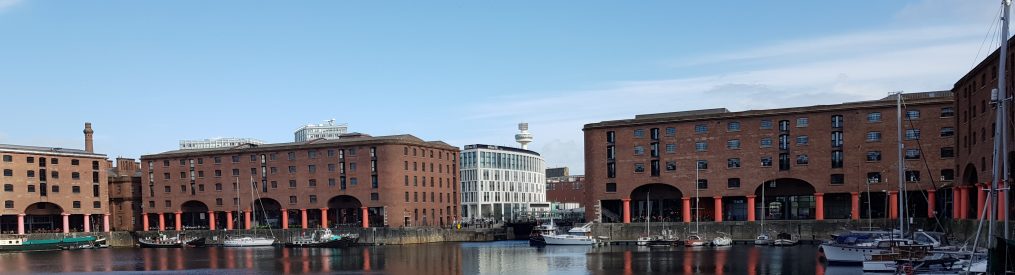
It is difficult to get one’s head inside the moral universe that existed when slavery was a major component of the the growing world economy in the 17th, 18th and 19th Centuries. As long as I can remember it has appeared self evident to me that slavery was, and is, an abhorrent practice. The dreadful treatment and brutalisation of fellow human beings seemed beyond understanding. The International Museum of Slavery in Liverpool charts the unspeakable trade and I thought I had a clear understanding of the whole awfulness of the business
However its still came as a shock to me when I read in Thomas Picketty’s excellent book “Capital and Ideology” that on the abolition of slavery it was the owners and not the slaves who were compensated. Even in a world where racism is still a major problem it is difficult to believe this was thought to be a morally reasonable solution.
Picketty provides an informative summary of the African slave industry, how it was “abolished” and compensated, and the the nature of the debates at the time in Britain, France and the US. Those debates were structured, according to Picketty, by the proprietarian view of the word which came to dominate over this period. In this view property rights were fundamental, tantamount to sacred and could not be challenged even if the property in question was another human being.
Ironically the power of this world view can probably be seen more starkly in the arguments of the abolitionists than the defenders of slavery. In France a dedicated abolitionist, Alexander Moreau de Jonnes saw it as axiomatic that the, “…masters of slaves must be compensated by an indemnity…” and that it was also obvious, “…the slaves, who will derive immense benefit from it, should naturally and necessarily…” fund the indemnity, ie. compensation.
Alexis De Tocqueville (the same) came up with what he saw as a sensible compromise whereby the government would pay half the cost of the indemnity whilst the slaves would pay the other half.
In the event the compensation was paid by the French state as was the case in Great Britain. The compensation provided to the 4,000 UK slave owners at the time was £20m, or 5% of UK’s national income at the time. If the compensation was converted into 5% of the national income of 2018 it would amount to €20bn, or €30m per slaveowner.
This enormous payment by the state meant an increase in the public debt which was funded by families on modest or average incomes in a highly regressive tax environment where most taxes were on consumption and trade. Crudely the poor in Britain compensated the rich in Britain for their slaves.
Talking of public debt it is worth considering the case of Saint-Domingue, now Haiti. This island had a population of which 90% were slaves. That demographic probably accounts for the fact that abolition there was the result of a slaves revolt. However, whilst they might be able to overwhelm their local oppressors they had to succumb to the demands of a French state for compensation of their former owners under threat of invasion.
In 1925 France recognised the independent Haiti following a promise by its government to pay 150 million gold francs (roughly €40bn in todays money) compensation to slave owners. This amounted to 300% of national income. The entire amount had to be paid within five years, so Haiti was required to borrow the money from French banks at about 5% pa and repay it over time. A very long time.
From 1849 to 1915 the French creditors managed to extract 5% per annum of the whole of Haiti’s national income. From 1915 to 1934 America occupied Haiti to restore law and order during which the French banks ceded the rest of their loans to the US. The 1825 debt was not finally wiped from the loan books until the early 1950’s. So the slaves of Haiti spent a century and a quarter paying compensation to their owners. Now that is what I would call “pretty hateful”.
The more you study black history the more shocked you are. Furthermore, abolition was little more than a step forward, a shift from de jure oppression to de facto oppression. In France, the UK and most egregiously in the US abolition was accompanied by new laws which ensured the exploitation and degradation of back lives could continue unabated.
In relation to black lives there is no neutral. There are no subtle distinctions to be made around Black Lives Matter. It is a motto for a race. A race which has experienced oppression in ways it is almost certain no one in a white skin can even imagine, particularly those from states with a colonial heritage. Oppression which appears to be part of the very fabric of reality. So ubiquitous as to be almost invisible to those not subject to it except for the most egregious examples of physical abuse.
There is only one legitimate response to the motto Black Lives Matter. Unequivocal agreement and support. No ifs, no buts, no clever distinctions.
 northerncomment