Following the Science

Just looking at some of the bare stats on C-19 you wonder if the Government made a mistake following “The Science”. If we look at the numbers of deaths caused by the virus by country we find only America has more deaths at 110,964, than the UK at 40,597.

Just looking at gross deaths however can be misleading. It is important to take account of the size of the population of countries to get a real handle on how they are doing. If we therefore look at deaths per 100,000 of population we find the UK is no longer 2nd worst they have dropped down the table to 4th worst. Ahead of them are Belgium pop 11,589,623, San Marino, pop 33,931, and Andorra, population 77,257.

The response of Ministers to such numbers is a challenge to the statistics. People record the numbers in all kinds of different ways and when the true numbers are known the picture will be very different. Well certainly accuracy of recording is something of an issue but it would be a brave person to suggest the bias will demonstrate what a great job the UK has done.

As I write there is a press briefing going on. It gets harder to motivate oneself to watch these now. You could write in advance 80% of the content. First, there will be an eye catching new initiative to control the virus or open the economy. Then their will be a change / reversal of the last eye catching initiative.

This change/reversal will be following “The Science” although we will not be able to see “The Science” for fear, no doubt, of misunderstanding it. This will ensure that we are now doing the right thing at the right time just as previously we were doing the right thing, only the opposite, at the previous right time

It is remarkable how the science seems to pirouette and leap around like a frenzied ballerina. If one were cynical one may begin to think the reassurances about how well the Government are doing are perhaps, optimistic.

There is, what I take to be an apocryphal story, of a boxing trainer who was encouraging his latest talent in a fight. The new talent was getting seven bells knocked out of him and returned to his corner at the bell with a black eye, split lip and multiple abrasions to his torso. His trainer, in order to reassure him said his opponent hadn’t laid a glove on him. The boxer replied, “Well keep an eye on that referee, cos some bastxxx’s knocking the stuffing out of me.”

Trading Down

As our government wrestles with Covid-19 (C-19) and seems to be losing, of which more later, the issue of Brexit is starting to rumble again. At the end of this month is the deadline for a draft trade agreement to have been out in place and for the application for an extension of the transition period beyond 31 December 2020 if needed.

Government Ministers are clear no extension will be applied for or agreed if proposed by the EU. They reassure us that Europe really does want a deal with its largest trading partner but that they will only do so at the last minute.

Trade and economics are complex subjects and Ministers seem very confident the EU will see the light but if they do not  that the UK will go forward to trade in the wider world successfully anyway. Maybe.

It is true that the UK is a major trading partner of the EU. It comes third after the US and China and does some €511bn of imports and exports amounting to 12.6% of the EU’s total trade. Looking the other way the EU is a major trading partner of the UK accounting for 45% of our exports and 53% of our imports. Just based on these numbers it looks likely to be more painful for us than for them but hey trade and economics is complex. I have no doubt Ministers have a good grasp of the real balance of advantage.

One reason we do so much trade with the EU of course is because it is close to us. The friction of distance means there is a strong correlation between distance and scale of trade. As Father Ted explained to Dougal, long way away, small; close up, large. It is certain we will not stop trading with Europe on the 31 December if there is no deal its just that the terms of trade will be so much the worse for us both. Worse for the 48% of our trade with Europe and worse for the 12.6% of their trade with us.

However, we will be bringing back sovereignty to the UK. Of course this is a UK which C-19 has exposed as anything but United. The differing approaches to management of C-19 particularly the move out of lock down has thrown into relief the distinctions between the “devolved authorities” which are increasingly looking like separate nations.

This might be dismissed as cosmetic but it has a powerful impact on the sense of national unity when people are thinking about cross border difference between England and Wales. It reinforces a process that has been in progress for some years which threatens the long term unity of the UK.

On a more positive note… for the EU. The ordo liberalism of Germany’s financial elite seems to have started to crack. C-19 and the economic collapse it has spawned across Europe has infected the swabian housewife. As the economic consequence started to become clear Germany moved to put in place €150bn of new borrowing and a fiscal stimulus of €130bn to combat the impact within the country.

More significantly perhaps for the long term future of the European project Germany worked closely with France to secure €500bn of common EU debt to provide grants, not loans, to support C-19 hit EU countries economies.

All this might be seen as part of a process of deeper monetary and fiscal integration which may ultimately lead to a United States of Europe. Certainly the perception of an EU supporting its weaker members in their hour of need is a much more attractive proposition than one which kicks its weaker members (Greece) when they are down.

There is probably an inverse relationship between the volume and veracity of nationalist rhetoric. However, if there were  promoters of Brexit who were little Englanders they may well get exactly what they wished for. Sadly little England may well be next door to, but outside of, one of the largest and most powerful trading blocks in the world. 

The Brahmin Left – Educational Elitism

Thomas Picketty’s latest book, Capital and Ideology, provides a stimulating analysis of contemporary political issues. These are always grounded in detailed historical research which explore how social, economic and political drivers of the past have shaped the nature of current political practices with a strong emphasis on the role of ideas.

One interesting issue he addresses is that of the Labour Party’s evolution in the post war period. It provides a challenging perspective on the collapse of the red wall and the alienation of working class voters over recent years. The issue of immigration and the lack of an effective narrative to address many traditional labour voters concerns is often cited as one of the causes of this loss of support.

The distance between the party and its voters seemed apparent in the unguarded comments of Gordon Brown, recorded during the 2010 election campaign, about a labour supporter, Gillian Duffy, who he called a bigot after she had questioned him on immigration and “people on benefits”. To dismiss the lady as bigoted was seen by many as illustrative of the views of an out of touch metropolitan elite who no longer had any real understanding of the problems faced by the people they were supposed to represent.

Clearly there are a number of historical forces at work in this apparent divorce of Labour’s political elite from its base. Picketty would be the first to accept and indeed insist on this. However, he points to a specific driver which he feels has played a major part in the evolution of this divide. Education and a concomitant commitment to a meritocratic view of equality.

Picketty sees the structure of political debate and division evolving over the post war period and resolves this evolution into two broad eras. Firstly, the period from 1950 to 1980 which he characterises as “classist”. In other words a battle between advantaged, right,  and less advantaged, left,  social classes. The heyday of the bipolar party system with Labour the party of the workers, and Conservative the party of the owners. The left / right model which this represented has, over the years become less relevant but continues to shape many debates in ways which are counterproductive in Picketty’s view. 

From 1990 to 2020 he perceives the terms of political debate having moved to one which is more about competing elites. These elites coalesce into two broad groupings around the traditional parties. One, Labour, supported by the more highly educated, the other, Conservative supported by the wealthiest and most highly paid.

Picketty’s analysis of the structure of political affiliations in the UK is situated in a much broader consideration of social democratic politics across West and Eastern Europe, the USA and some non-western countries including India in the post war period. He never lacks ambition.

He looks specifically at the level of education of voters for parties of the left and parties of the right using a variety of survey sources. His findings across the piece for left of centre social democratic parties are similar to those for the Labour Party in the UK. Broadly he claims that in the classist period, from 1950 to 1980, the vote for left wing parties was significantly lower amongst the 10% of the population with the highest levels of education than amongst the 90% of the population with the lowest levels of education. The size of the gap between these two diminished over the two decades from 1950 such that in the 1990’s and 2000’s the vote for Labour amongst the 10% of the population with the highest levels of education increased and became significantly higher than those voting for the party from the 90% of the population less well educated.

In parallel with this a meritocratic theory of inequality was adopted. Equality of opportunity was seen as the key which critically meant developing better access to education for the working class. The 1960’s saw the expansion of the Universities following the Robbins Report and the expansion of Polytechnics promoted by Anthony Crossland. Essentially, the aim was to level up the playing field of education to allow working class students to have better and more equitable access.

Through the late 1960’s and 70’s this obviously benefited a significant number of Labour supporters who went on to become senior members of the Labour Party with a very positive view of the beneficial effects of education. Consistent with this was a positive view about their own meritocratic progress. This, according the Picketty, has meant over the years Social Democratic Parties including Labour have “come to be seen as increasingly favourable to the winners in the educational contest while they have lost the support they used to enjoy among less well-educated groups in the post war period.”(712)

The problem with a view that focuses on formal access to education as the key driver of equality fails to take account of the many, less obvious, barriers that exist for individuals from low income families. Picketty feels that the loud support for a meritocratic starting point ignores the facts on outcomes at the end of the race. 

Picketty refers to what he sees as an “astonishingly prescient” work by the sociologist Micheal Young, The Rise of Meritocracy”. This was a dystopian novel in which British society is increasingly stratified on the basis of cognitive capacity which is closely related to social origins. In the novel the Tory Party become the party of the highly educated and dominate the “technicians” in a world where science has decreed that only one third of the population is employable. Picketty sees elements of the novel coming to pass but it is the Labour Party which has become the representative of the educational meritocracy, or in Picketty’s short hand the Brahmin left.

There is much in Picketty’s analysis that can be challenged but his limpid exposition is exemplary and provides a clear target for those who wish to challenge him. His analysis of the mistakes and failures of social democratic politics is much more wide ranging and I will come back to it in the future. His thesis about the Brahmin left as part of it is worthy of consideration and should at the very least provoke wider debate which is sorely needed, as what is not in doubt is the alienation of many traditional Labour voters.

Taxing Times Ahead

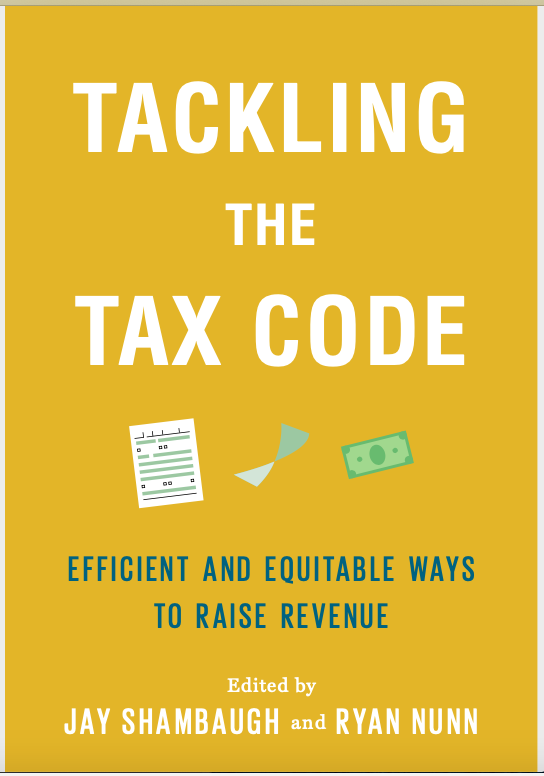
A new book on taxation, Tackling the Tax Code, published, (free) in the United States by the Brookings Institution has things much needed to inform debate on this side of the Atlantic. As we emerge from lock down its economic consequences are beginning to become apparent, and they are vast. Enormous sums have been pumped into the economy by the government to prop up employment, sustain the health service and fight the Covid-19 virus.
An enormous bill has been accumulating on the balance sheet of the government and the Bank of England one which will have to be paid at some point. When and how are questions which will soon dominate political debate.

There are two ways in which you can reduce debt. First, you can cut your expenditure so that more of your income can be devoted to reducing the debt. This is what we tried in relation to the debt arising  out of the 2008 credit crunch. A decade of Austerity. Easy to understand because of analogies with household debt even if some believe the analogy involves a category error between national and household debt.

Whether another decade of Austerity is politically acceptable or even possible is a moot question. At the moment politicians do not seem to be promoting that line. Of course if they do not it rather calls into question the TINA argument about the need for the first decade. However, the expenditure side of the debate is for another time.

An alternative to reducing expenditure is increasing your income. How does the Government do this? Through taxation. Over the past few decades the direction of taxation policy has been remorselessly down, particularly for those on the highest incomes. C-19 and the subsequent recession is going to challenge that trend. If it is to change then there are a number of issues which need to be addressed. These need to be debated publicly for they have enormous consequences for all of us.

Which brings me back to the book. This is firmly focused on the US tax system but many of the issues and opportunities identified could equally be applied in the UK in fact some of the issues require multi-national responses in a global economy.

The book looks at the existing taxation system in the US and how it has evolved in recent years and particularly how income from taxation has gone down following tax cuts by GW Bush and D Trump. It then looks at how taxation should be raised in a fair and progressive manner.

One of the key principles the authors of the book promote is that taxation should be distributed fairly and progressively. Those with the broadest shoulders should take the heaviest load. Given the enormous concentrations of wealth allowed to build up over recent decades there is consideration of how this might be taxed including proposals for a much more effective inheritance tax for the wealthiest in the country. This would have the double benefit of raising revenue and reducing inequality which some believe is becoming a genuine drag on the economy.

In a similar vein there is also a proposal for a tax on financial transactions. This would mean that every time shares, bonds or fancy derivatives were sold they would be subject to a small charge. The proposal is 10 basis points or 1 tenth of 1 percent. Sounds like a small number but they estimate it could generate $60bn per annum when fully operational. Given that most of the wealth of very wealthy people is stored in financial instruments the costs of this would be mainly on the broadest shoulders. 

More specifically the book looks at adopting a Value Added Tax (VAT). Clearly this is something we have already. What is interesting however is the discussion about how that should be adjusted through transfers to low income households to reduce the regressive impact of such a tax.

More effective taxation of multinational companies (MNC’s) is also called for. This to ensure that under current laws they pay what they are supposed to and that incentives to off-shore production and relocate profit centres are eliminated. This is combined with proposals to promote a global approach to MNC’s which will address the race to the bottom of tax reductions to attract corporate HQ’s. Changing accounting principles to tax according to location of turnover as opposed to HQ would transform the behaviour of corporates and enable all sovereign governments to more effectively ensure corporates pay their fair share.

Resourcing the revenue authorities appropriately is also something called for. Interestingly in countries around the world where there have been homilies about the need to act prudently they have almost all reduced the resources of the organisations whose job it is to raise the revenues that have been publicly approved. Given they raise much more than they cost there is clearly no prudential reason to do this.

Taxation is complex and in the main very dry, however it is the engine of civilisation. It provides the resources to educate, heal, protect, support and sustain civilised society. It is something we should not leave to the politicians or the technicians. There are basic issues of equity which need to be addressed in order to create a fair, transparent and progressive taxation system. If we do not militate for that you can be sure something much worse will be put in place. Something that reinforces inequality rather than reducing it.

The Tax Code:  Efficient and Equitable Ways to Raise Revenue. Ed J Shambaugh and R Nunn. Brookings 2020.